What causes damp and mould?
Excess moisture can cause mould to grow and may be the result of issues either inside or outside your home.
Common external causes include blocked guttering, damaged window frames, roof leaks, and defects in walls that allow water to enter the property. The most common internal cause is condensation.
What is condensation?
Water is always in the air but can’t be seen because it’s in vapour form. Condensation occurs when warm, moist air comes into contact with a cold surface and water droplets form.
You can often see condensation on windows on a cold day or on mirrors after a bath or shower. It isn't always a problem, as long as the surface has time to dry out each day.
Preventing damp and mould
Keeping damp and mould at bay is important for your health and the condition of your home.
If you spot an issue in your home, such as a roof leak or issue with your windows, please let us know straight away.
Making sure your home is warm and well-ventilated will help prevent condensation and the growth of mould.
Our top tips
Moisture in your home is the result of everyday activities – even just breathing adds moisture.
Did you know? Just one person asleep over one night can add half a pint of water to the air in the room and twice this amount when active during the day.
By reducing moisture, you will reduce condensation in your home.
| Activity | Volume of moisture produced |
| A bath or shower | 2 pints (1.14 litres) |
| Washing dishes in the sink | 2 pints (1.14 litres) |
| Two people at home for 16 hours | 3 pints (1.7 litres) |
| Cooking and using a kettle | 6 pints (3.4 litres) |
| Drying clothes indoors | 9 pints (5.12 litres) |
What can you do?
-
Where possible, dry your clothes outside (even on cold days when the ground looks dry, your clothes will dry too!)
-
If drying clothes inside, hang it in the bathroom with the door closed and the window open – and if you have one, turn your extractor fan on.
-
Use a domestic dehumidifier to help reduce moisture in the air when drying clothes indoors.
-
If you use a tumble dryer, make sure it is vented to carry moisture outside.
-
Cook with the pan lids on. Use the minimum amount of water to cook vegetables and turn down the heat once the water has boiled.
-
When filling a bath, run the cold water first, then top up with hot water. This simple tip reduces steam by up to 90%, which prevents condensation.
-
Never use bottled gas heaters. They are a safety risk and produce excessive moisture, so using them in your home is against your tenancy agreement.
-
Never use a gas cooker to heat your kitchen.
-
If you use sterilising equipment (for baby bottles and other items) make sure a window is open.
Ventilation (air flow) reduces condensation by removing moist air and replacing it with drier air from outside.
What can you do?
-
Reduce overnight condensation by ‘cross-ventilating’. This means opening windows as far as the first notch on the handle, on opposite sides of your home (or upstairs and downstairs). Do this for at least 30 minutes each day to allow dry air through.
-
If you have modern windows, lock them in the latch position to allow air through a small gap.
-
Place all furniture away from walls, including beds, so air can move freely.
-
Leave a gap between the curtains and the wall during the day.
-
Open internal doors throughout your home.
Remember! If you go out, make sure all the windows are shut and secured.
In the kitchen, bedroom and bathroom:
-
Ventilate the kitchen when cooking, washing up or washing clothes by hand. A window slightly open is as good as one that is wide open.
-
Make sure that your extractor fans in the kitchen and bathroom are continuously running (this only costs a minimal amount and will help reduce the amount of moisture within your home).
-
Keep your kitchen and bathroom doors closed to prevent moisture escaping into the rest of your home.
-
Leave your bedroom window slightly open at night, unless the window can be easily reached by an intruder.
-
If your windows have trickle vents, make sure the vents are open and that they are not blocked up.
-
If you have wall vents installed, make sure that these are open and not covered.
In all of our rented homes, we will make sure you are able to ventilate your property and that you have a heating system which, if properly used, can reduce condensation.
Warm air hangs on to moisture whereas cooler air deposits droplets of moisture. Think of air like a sponge: the warmer it is, the more moisture is held in it.
If you heat one room to a high level and leave other rooms cold, condensation is likely to be much worse in the unheated rooms. That's why we recommend keeping radiators on low in rooms not in use when you have your heating on.
You can also find out more about how to heat your home with as little energy as possible here.
Removing moisture will prevent mould growth.
-
Dry your windows and windowsills every morning.
-
Wipe dry all surfaces in your kitchen and bathroom that are wet.
Fight mould
Wipe walls and windows or spray them with a mould spray (available at your local supermarket or DIY store). Always read the manufacturer's instructions as some require you to leave the treatment on for a period of time before wiping it off.
What to do if you find damp and mould in your home
Let's help you diagnose the problem
Mould is present if you see ugly, small black dots forming that multiply and spread.
It's common to find it in the sealant around your bath, or the seals of a window and this can usually be wiped away using household mould cleaning products. If the mould is spreading and you aren't able to get rid of it as part of your usual cleaning routine, we need to know about it.
Help us help you
Take a look through the examples of mould below to understand the issue before you report it to us.
It’s really important to let us know if there is anyone within your home who has any health concerns or vulnerabilities that could be made worse by damp and mould exposure.
Mild mould
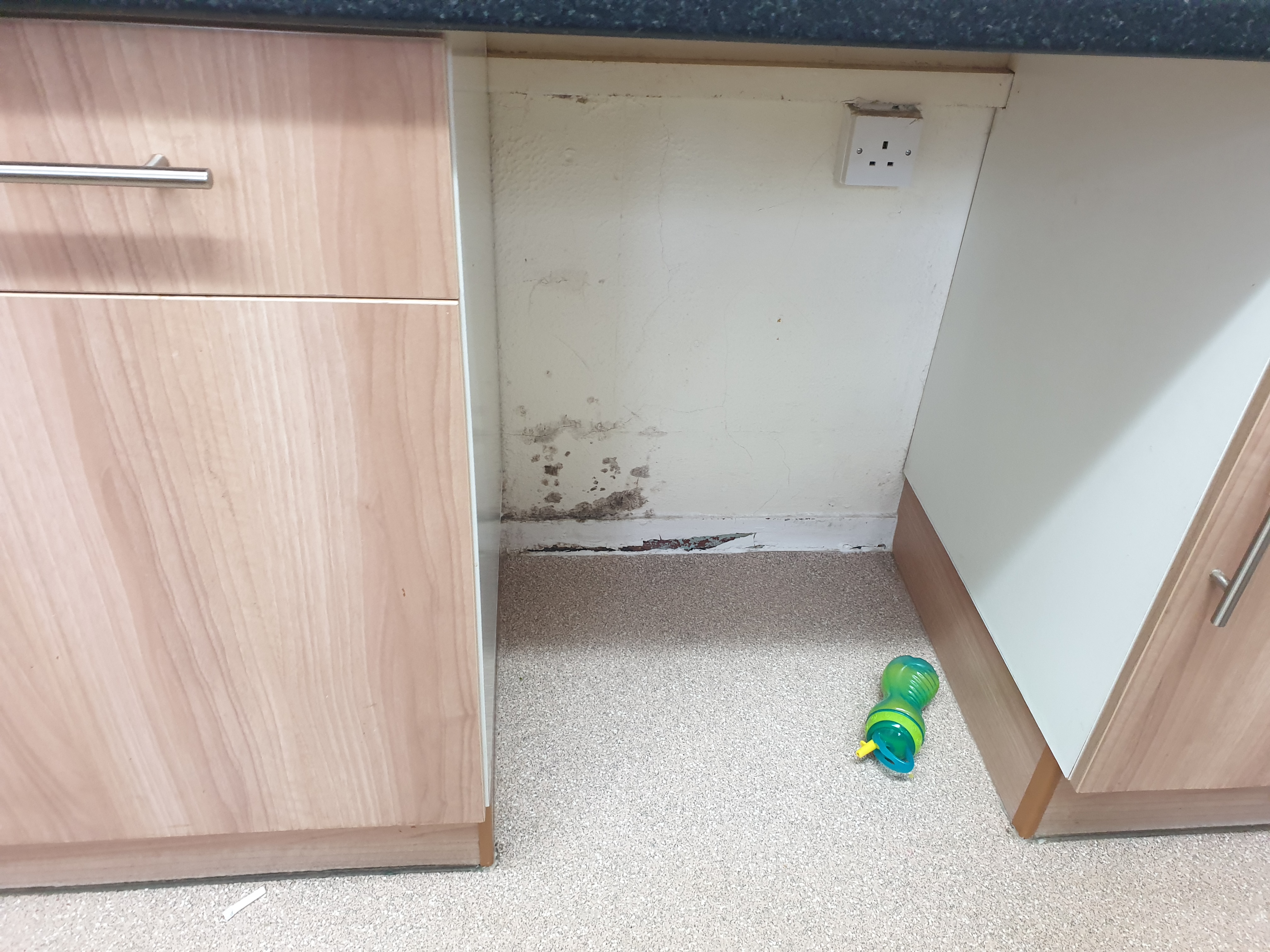
This is mould that is in one small section of one room. It could be a corner, around the windows or behind a piece of furniture you have moved.
Let us know about it and we will investigate within 20 working days.
In the meantime, read our advice above on how to treat it and contact us if the issue gets worse or you are worried about it.
Moderate mould
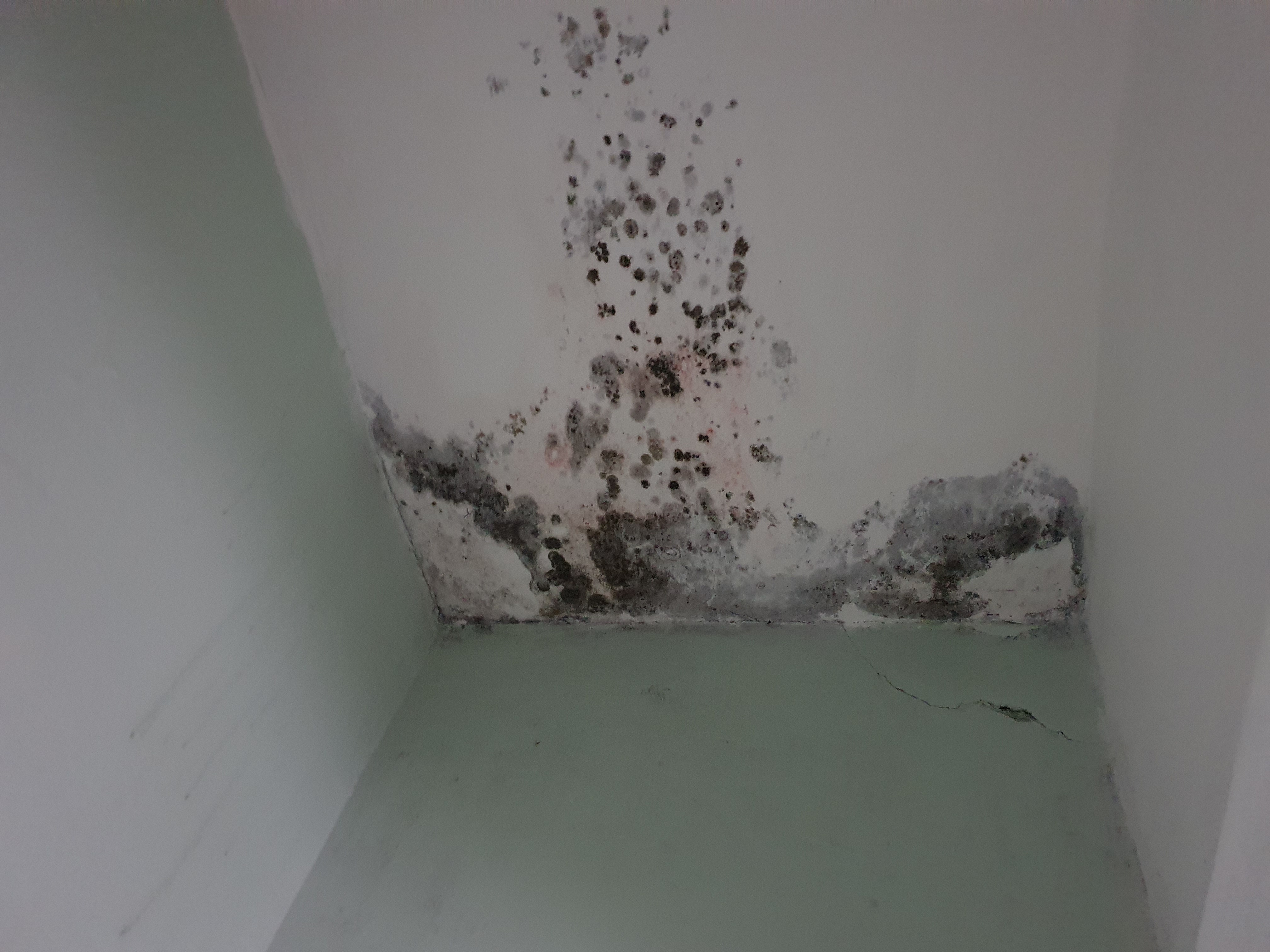
This is a larger area of mould in one room. It could be a large section of a wall or ceiling.
Let us know about it and we will investigate within 10 working days.
In the meantime, read our advice above on how to treat it and contact us if the issue gets even worse or you are worried about it.
Severe mould
.png)
Sever mould will be present across a whole room or in multiple locations across the home. It may be difficult to clean without specialist products, or the area is too big to deal with.
If you find this to be case, please call us on 0800 218 2247 straight away. We will investigate within 24 hours of you reporting this to us.
This amount of mould does not appear overnight and is usually because it hasn't been dealt with early on.
Please let us know about issues as soon as you spot them so we can see to them before they become a bigger problem.
Report damp and mould to us
- On your online account at www.wcht.org.uk/your-account
- Call us at 0800 218 2247
- Email enquiries@wcht.org.uk
The more detail you can provide us, the better we can help you.
Please provide us with as much information as possible when reporting an issue. This includes photos of the affected areas and whether you or anyone in your home is vulnerable or has any health issues.
After you've reported damp and mould to us, we will:
- Carry out an investigation and record our findings – this can be done by visiting your property or can be done remotely.
- Send you a report, known as a written summary of investigation, which details what we found and the risk associated to the damp and mould and outline an action plan to find the root cause of the issue.
- Carry out the repairs detailed within our report which will outline how long we have to complete these.
- Give you advice about how to prevent damp and mould.
- Check in with you after the works are complete and keep your damp and mould case open until we are confident that the damp and mould has not returned.
Repairs and improvements to tackle damp and mould
The work needed to tackle damp and mould will depend on the cause of the problem. We'll investigate each case individually and identify any repairs or improvements needed to help prevent the issue from recurring.
Common works that may be carried out in your home include:
Replacement or installation of extractor fans in bathrooms and kitchens
Installation of whole property ventilation systems
Three-stage damp and mould treatments
Thermal boarding (a way of adding extra insulation to the inside of a wall to help keep a home warmer and reduce heat loss)
Guttering repairs
Roof repairs
Repointing of brick work
Any repairs that are required to tackle damp and mould will be detailed in the written summary which will be shared with you once we've visited.